
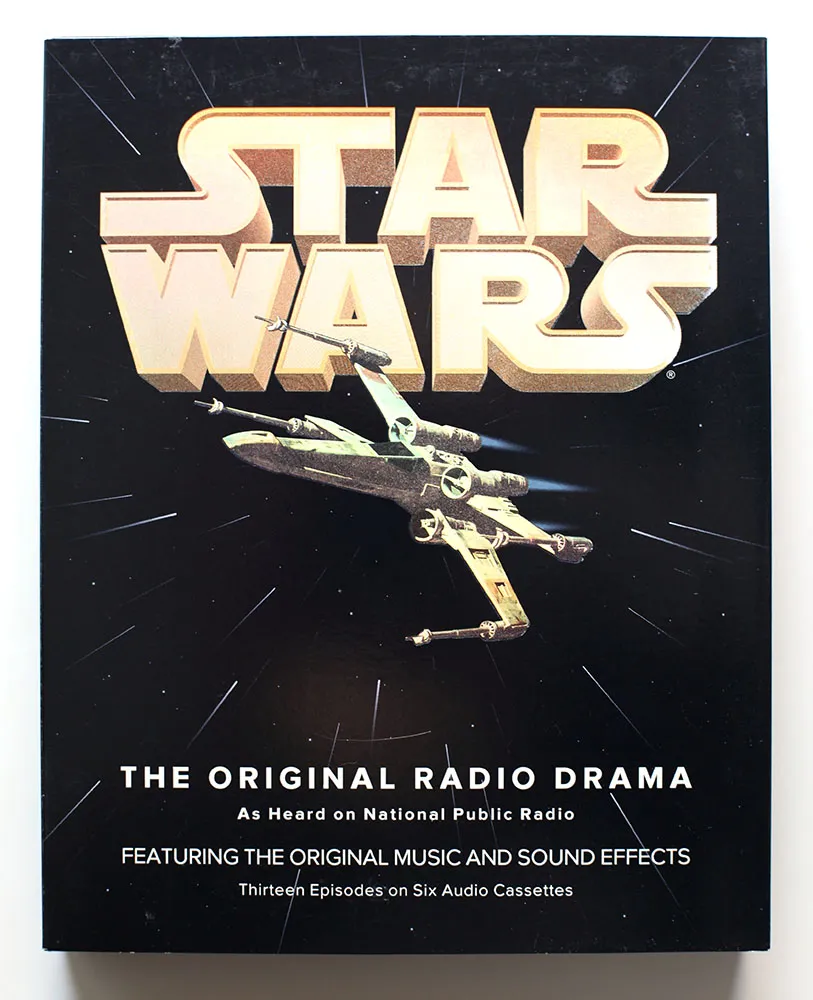
Back in 1993, I had just started a job at Rivertown Trading Company as a graphic designer. Part of that job was to design packaging for a division of the company called HighBridge Audio. One of the most interesting titles I got to work on was *Star Wars: The Original Radio Drama,*which had been broadcast on National Public Radio in the early eighties and was being released for the first time on audio cassette. (CD came later.)
It was one of the most elaborate packaging projects I ever worked on, with complicated die cutting and holographic foil embossing on the cover.
While working on the project, I was flown out to Skywalker Ranch near San Rafael, California, home of Lucasfilm, to rifle through file drawers of 35mm slides for possible use on the packaging. (My flight was delayed, so I missed out on having lunch in the same room as George Lucas.) Considering the rich visual imagery of Star Wars, it was surprising how little suitable photography they had for us to use. The complex visual effects only existed in the film, not in the publicity shots, which were taken on the set for the most part. The “stills” of, say, an X-wing fighter flying over the Death Star only existed as crudely retouched photos.
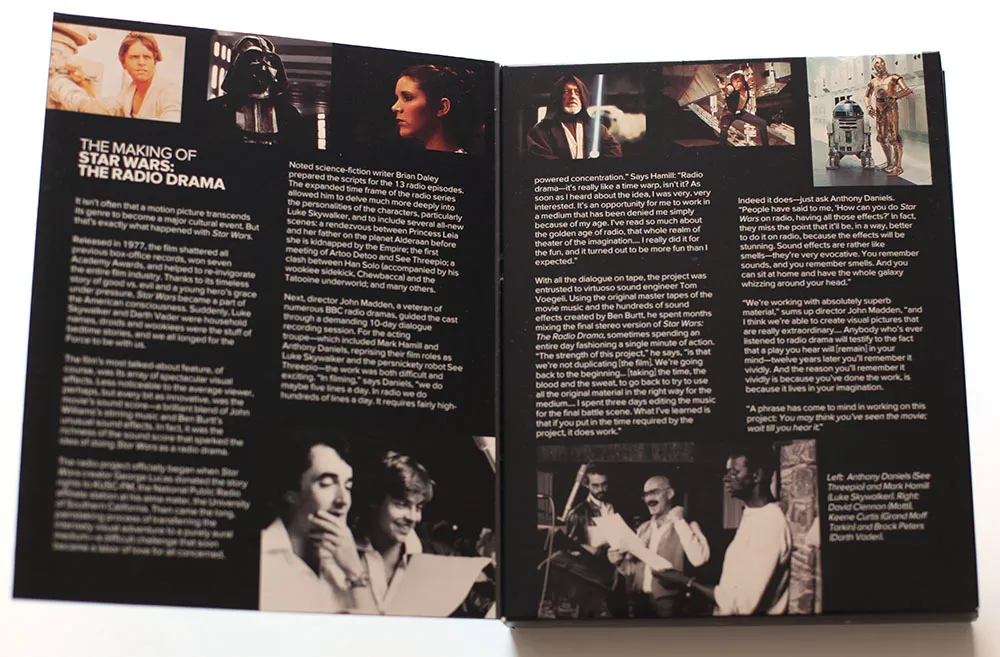
Back then I was also working an early version of Proxima Nova, which at the time I was calling Visigothic. I had tried some different fonts for the Star Wars packaging, including ITC Avant Garde Gothic and News Gothic, but nothing looked quite like what I wanted. On a whim, I tried Visigothic. It was plain (like News Gothic) and also a bit geometric (like Avant Garde). It felt a little weird using my unfinished type design for the project, but it seemed to work. I showed it to the other people I was working with and they thought so, too. So I used it.
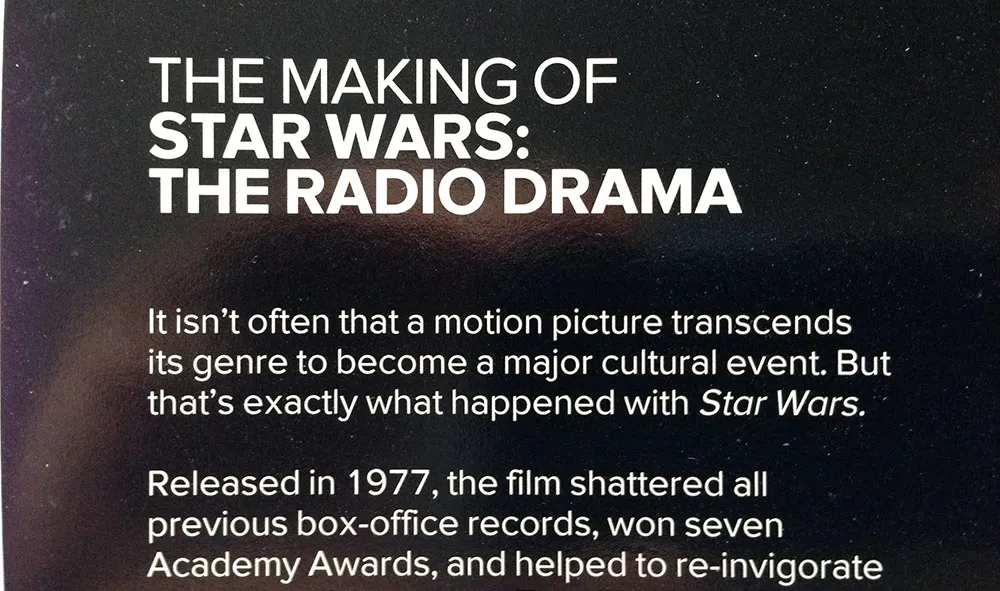
I released the fonts about a year later as Proxima Sans. The version on the Star Wars packaging is fairly close the final version, although you can see from some of these images that the kerning was not quite finished. Also, the italic was just a simple slant of the roman, but with a modified lowercase “a”. Some other differences: the lowercase “y” has a longer tail and I hadn’t done the ligatures yet.
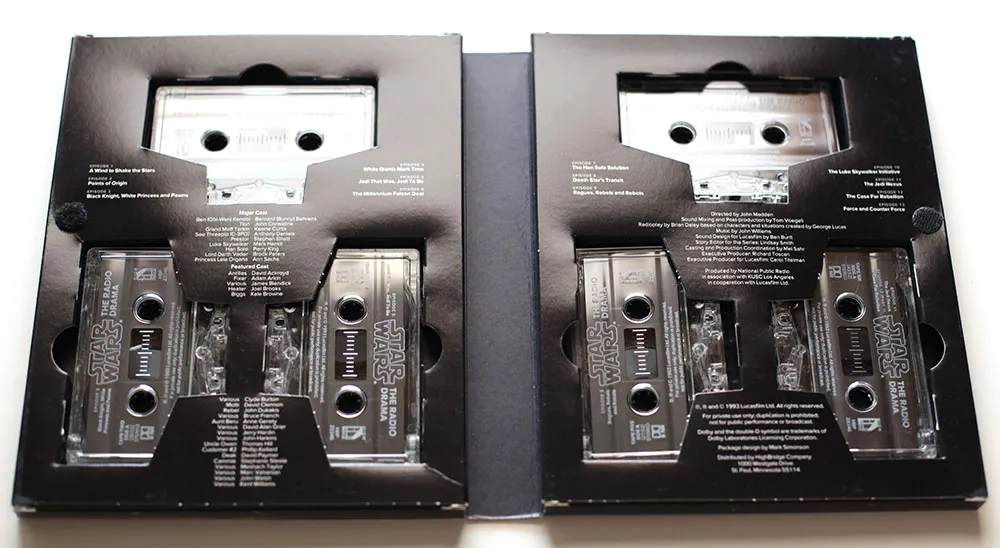
Someday, this font would become Proxima Nova, but this is the first time it was used publicly. It was exciting for me at the time to see how it performed in the real world, and it made me confident that it was worthy of releasing commercially.
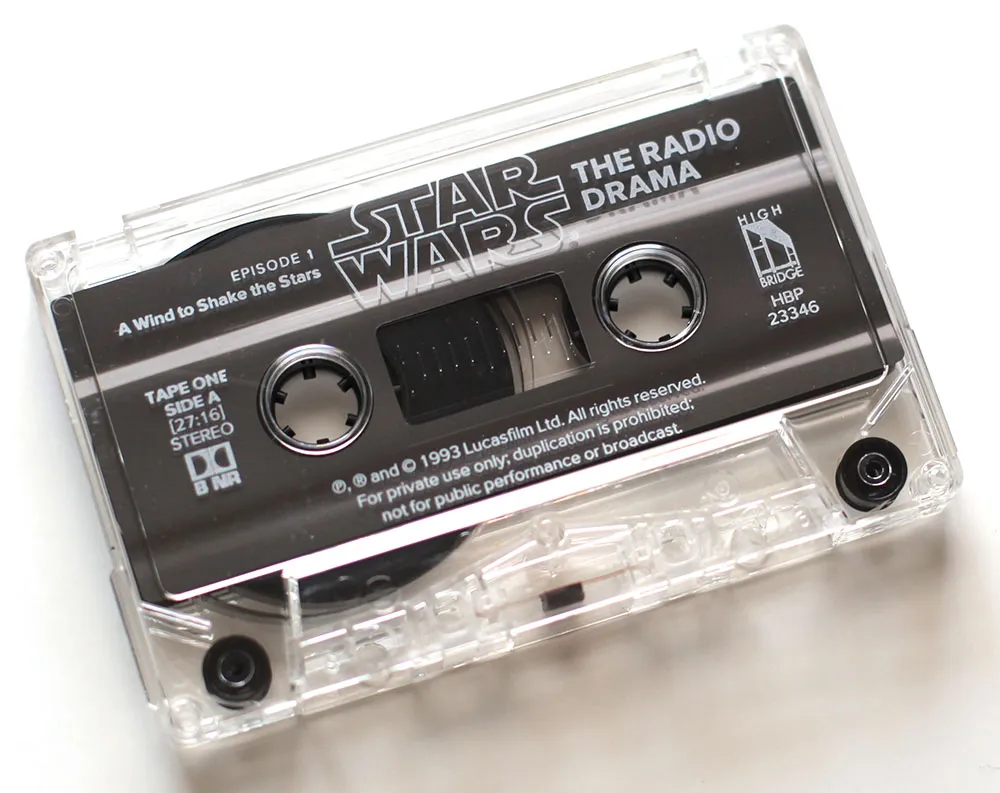
If you ever wondered why Proxima Nova includes a ℗, now you know. On the CD version of the series, which I did in the late nineties, I used Proxima Sans, and I believe HighBridge has used Proxima Nova for more recent incarnations.
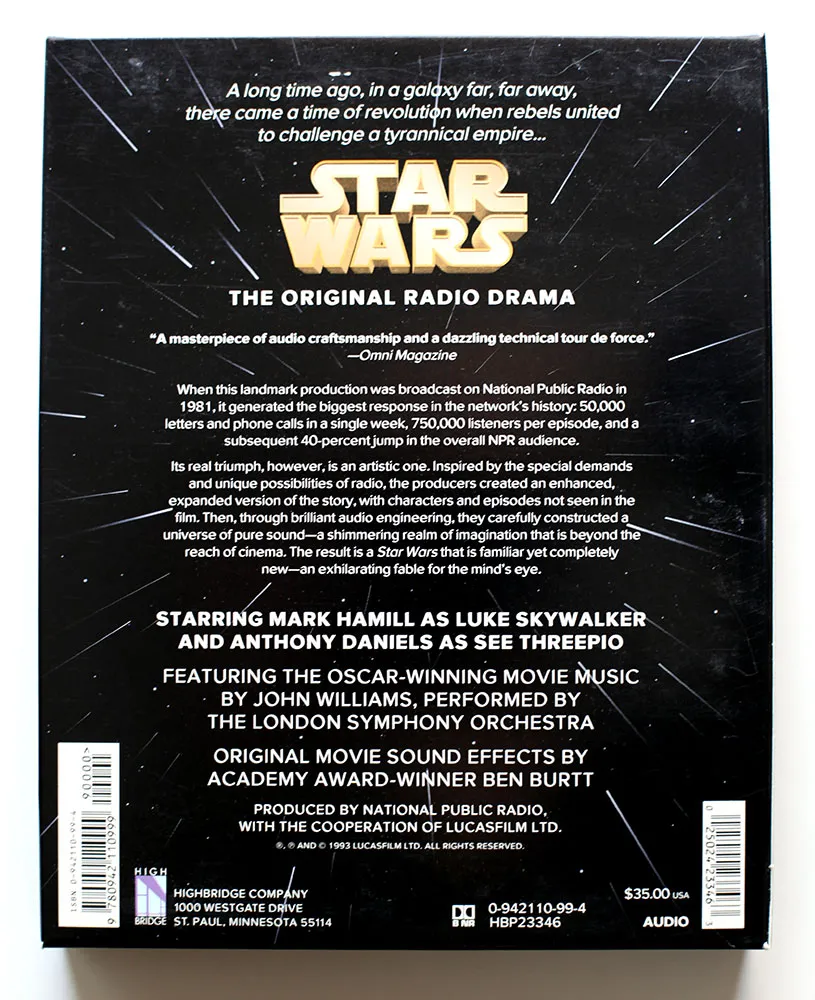
I created the 3D version of the Star Wars logo and the “hyperspace” star pattern in Adobe Illustrator and a program called addDepth. What I remember most about working on this project was how excruciatingly long it took to preview the artwork on the primitive Mac IIcx I had to work with at the time.
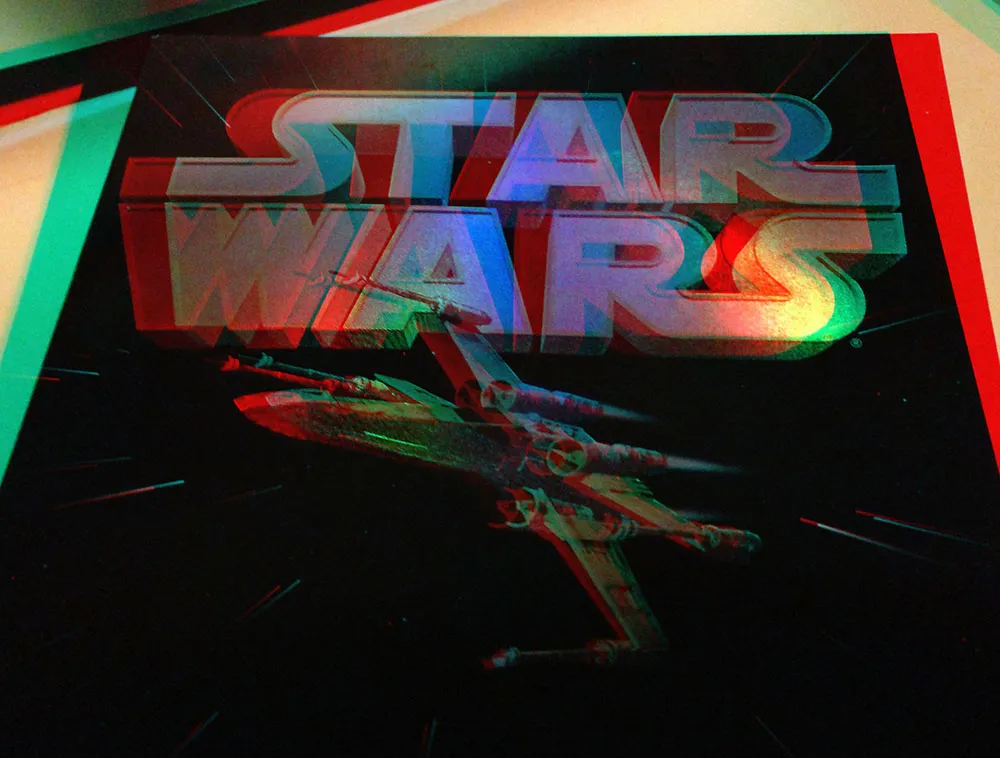
If you’ve got a pair of anaglyphic glasses (red/blue), this will give you a better idea how the holographic foil stamping looked.
Additional details If you’re interested in Proxima Nova and how it looks today, you can find more info, test and license the fonts, and download PDF specimens on the Proxima Nova page.
 Permalink
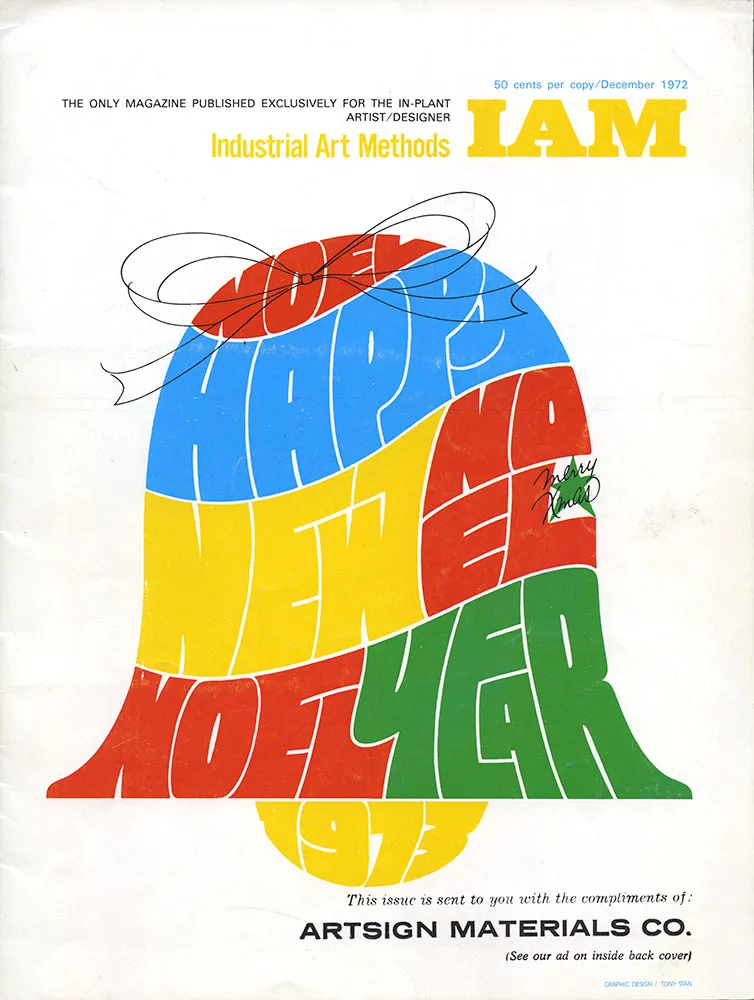
I don’t remember the details of how I got hold of this particular issue of Industrial Art Methods (“The Only Magazine Published Exclusively for the In-Plant Artist/Designer”), but it was one of the key things that sparked my interest in type design when I was a teenager.
I didn’t notice until years later that the lettering/illustration on the cover was by Tony Stan, designer of many faces for International Typeface Corporation, such as ITC Garamond, ITC American Typewriter, and ITC Cheltenham.
What caught my interest, though, was an article titled “How visual graphics develops new alphabets for the photo typositor”. By “visual graphics” they mean Visual Graphics Corporation (VGC), and by “photo typositor” they mean the Photo Typositor®, one of the most widely used headline setting machines of the phototype era. The article included this two-page spread:
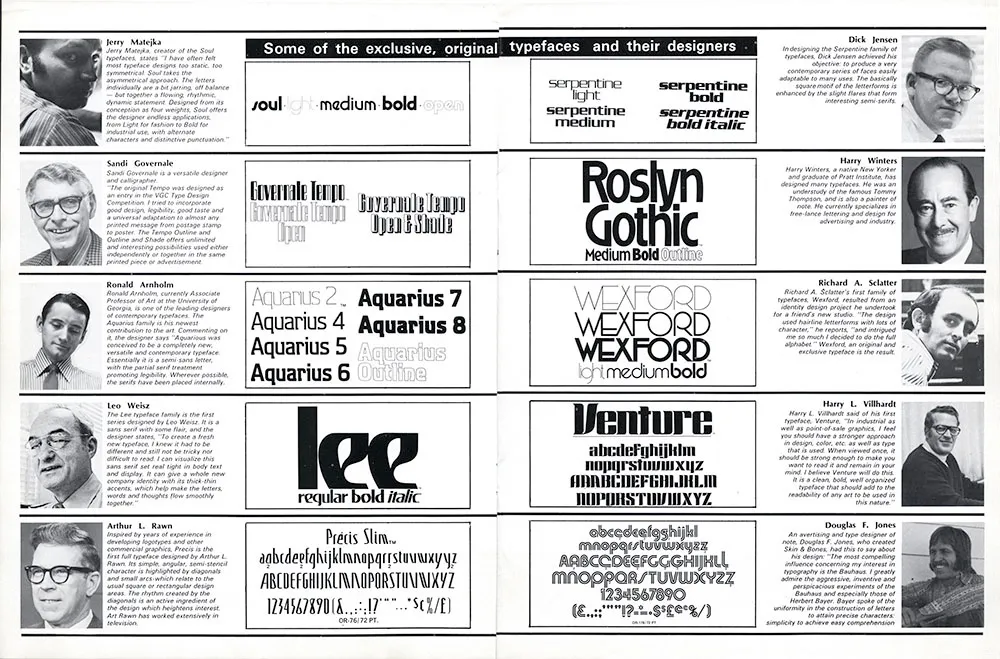
I was already interested in type at this point, having purchased sheets of rub-down type for my high school newspaper. I didn’t know what a Typositor was, but here were a bunch of guys who had designed some really cool typefaces for it. I started imagining creating my own type designs and maybe getting them published, like these guys. Let’s take a closer look.
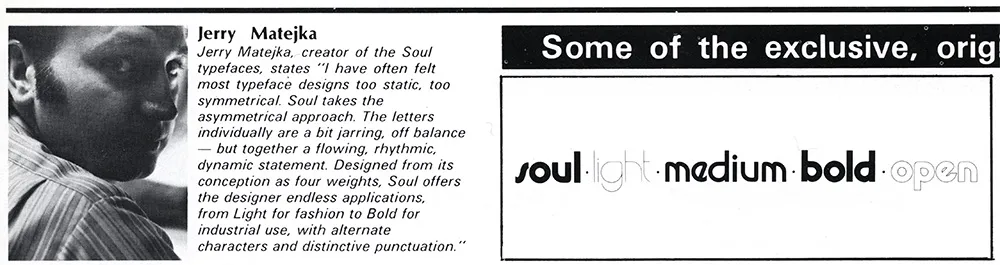
I have no idea what became of Jerry Matejka. His Soul family was one of my favorites in this article. It seemed very hip and cool. I’ve rarely seen it used, though. It’s funny how the description isn’t much different than what you still see in the marketing hype for fonts. As far as I know, this is Jerry’s only type design.
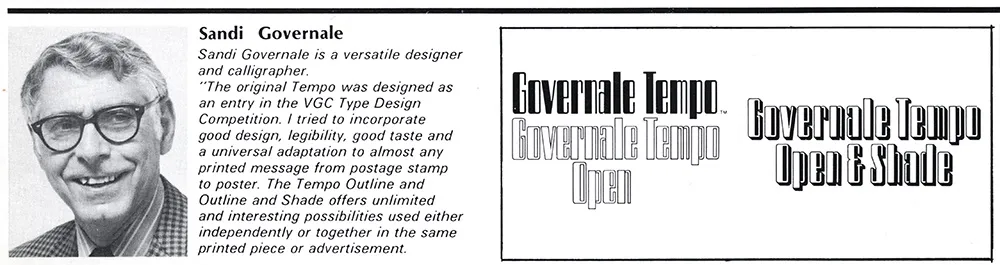
Sandi Governale’s description is even more hyperbolic—there’s nothing this typeface can’t be used for! Can’t say I ever did see it in use, though. I remember thinking this was one of the weaker designs in the article. Sandi also designed some typefaces for Photo-Lettering, Inc.
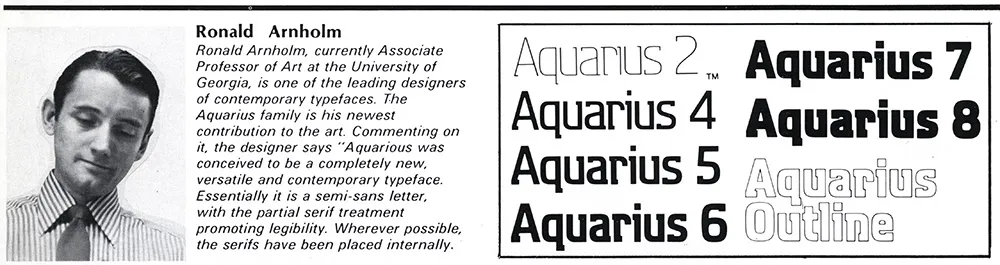
Ron Arnholm is still around. He is best known for designing ITC Legacy (1992), a “super family” with both serif and sans serif styles. I used to see Aquarius quite a bit on book covers back on the seventies. It always reminded me of the old 3M corporate typeface, but more stylish. Ron has attended the last few TypeCons, so I’ve gotten to know him a little bit. Nice guy. What I want to know is, whatever happened to Aquarius 1 and 3?
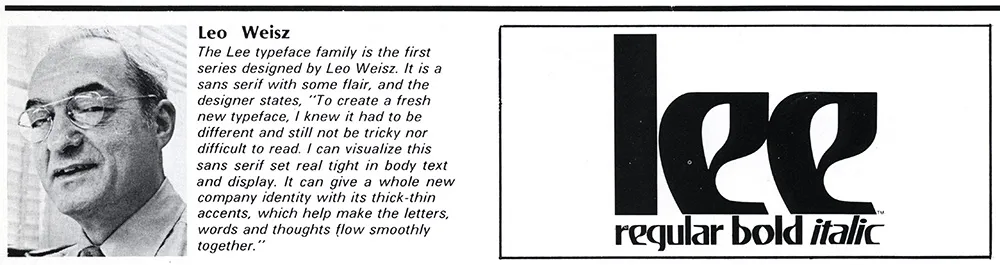
You wouldn’t expect that a guy who looked like Leo Weisz would have designed a weird-ass typeface like this, would you? It seems to be his only type design. You’ve see Lee in use on the VHS logo and the Charlie’s Angels logo. Leo is still around. He’s over 100 years old now, still paints, and even has a Facebook page.
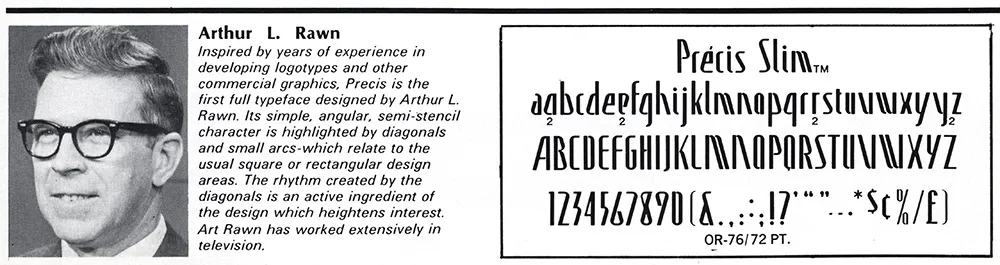
As far as I know, this is the only typeface Arthur Rawn is credited for. It seemed strange to me when I first saw it, even more so looking at it now. A very odd design, very uneven rhythm. I can see a little bit of Amelia and Peignot as possible influences. I don’t recall ever seeing it in use.
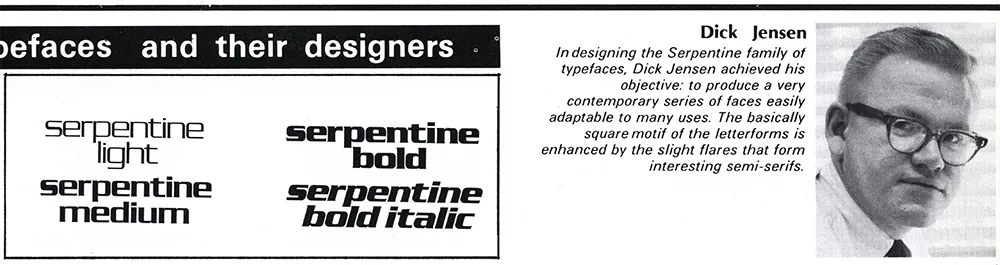
Serpentine is probably the most well-known typeface of the bunch, one of the few that made the transition to digital type fairly early on. I can’t explain why, but Dick Jensen looks like just the guy to design something like this. Turns out Dick was a Minnesota boy, born in Saint Paul (where I live now). As far as I can tell, this is his only type design. He died in 2000 at the age of 72.
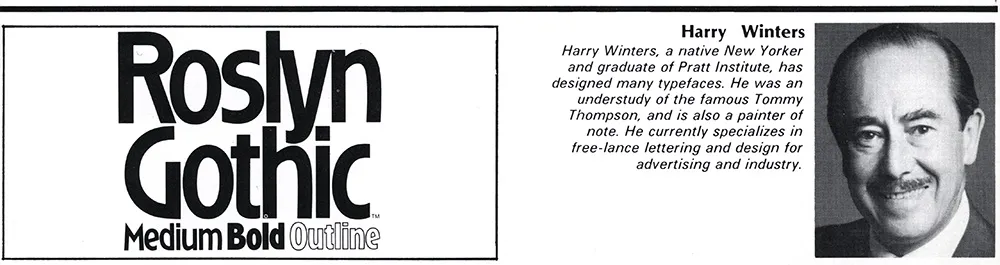
I remember liking this one a lot when I first saw it. It was fairly popular in the seventies. Looking at it now, it has a kind of Arts & Crafts look to it. Not sure what became of Harry Winters. He doesn’t seem to have been responsible for any other type designs.
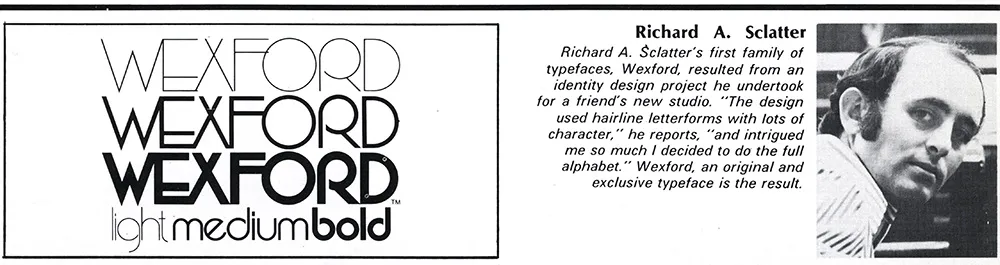
Richard Schlatter (his name was spelled wrong in the magazine) is still around and living in Michigan. Besides Wexford, he also designed a series called Glyphic, a very bold, high contrast sans serif. Wexford was another of my favorites from the article. A very seventies art deco face if there ever was one.
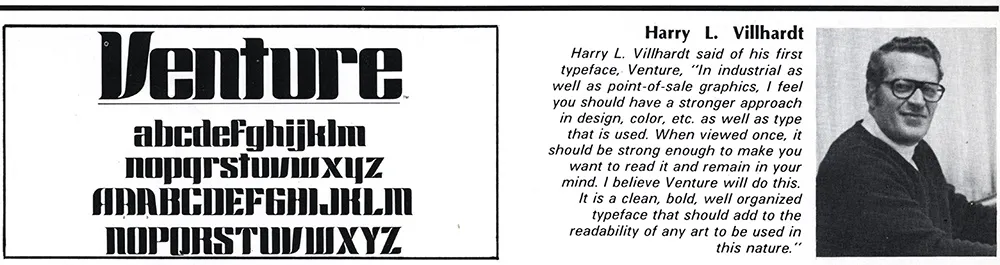
According to Canada type, which did a revival of Venture recently under the name Chopper, Harry Villhardt was a friend of Dick Jensen (above). I can’t remember this typeface having been used much, although it’s easy to picture it being used on 1970s science fiction paperback covers.
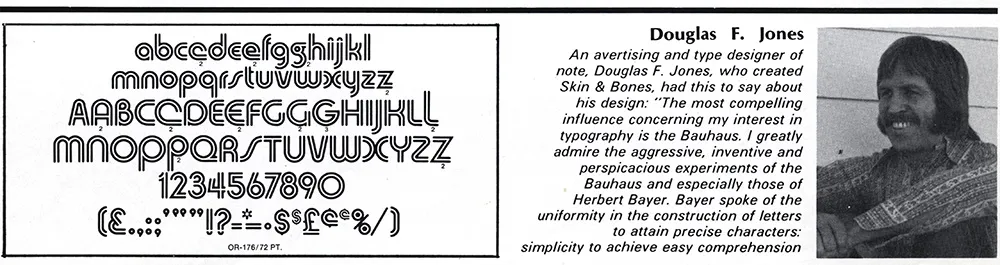
When I tried to do a web search of Douglas Jones and his Skin & Bones typeface, all I could find were references to a TV show called Fear Itself which had an episode called “Skin and Bones” starring an actor named Doug Jones. As for Doug Jones the type designer, Skin & Bones is the only published design of his I could find. I quite liked it back when I saw it in this article. Doug also gets my vote in the Sonny Bono Look-Alike Contest.
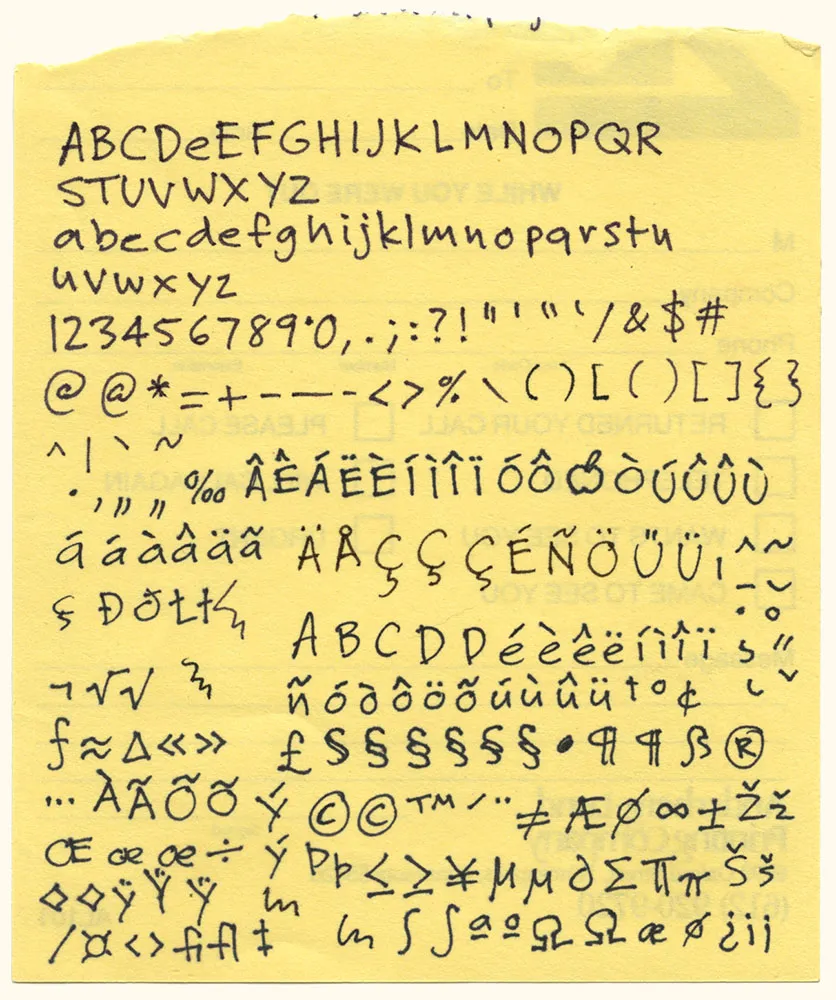
Here it is: The original artwork for one of my most popular fonts, Felt Tip Roman. I scribbled out all the characters needed in a typical font on the back of a phone message pad (about 4.128” x 5”) using a Pilot Razor Point felt pen. I deliberately tried not to be too neat or careful to try to capture the spontaneity of natural handwriting. Whether it would actually work as a font, I had no idea. That it would become a commercially successful font someday would have struck me as absurd at the time. I probably would have been a bit more careful and circumspect if I’d known. But perhaps then it would not have been as popular.
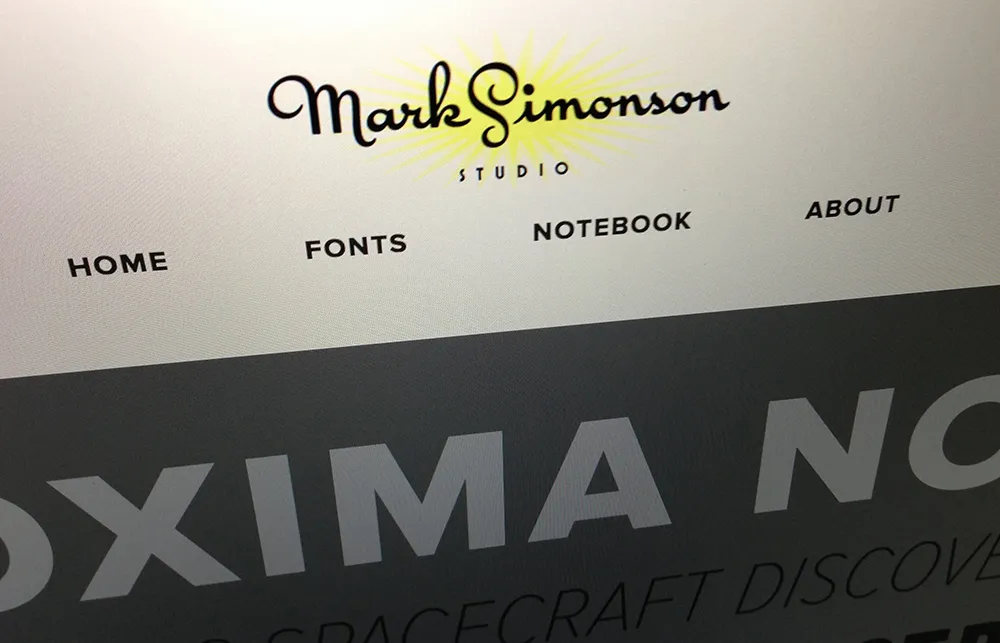
I first launched my website in spring of 2000, offering my services for design, illustration, and lettering. Oh, and I also showed a few fonts I’d made.
I’d just quit my job as a product designer at Rivertown Trading Company, and I had a big plan to do all the things I had long dreamed of doing, but couldn’t because of my “day job”. I wanted to get back into doing illustration. I wanted to try to sell my services as a lettering artist, something I’d only previously done on my own design projects. And I also wanted to get back into making fonts, something I hadn’t really done very much since I released a few fonts through FontHaus in the early nineties.
My website has evolved over the past thirteen years, just as my career has. The illustration thing never really went anywhere. The lettering thing peaked about 2005. But the font thing really took off. My site has changed to reflect this.
The new design, which I’m launching today, is all about the fonts. Among the changes, I’ve created all-new PDF specimens, added more complete “where to buy” information, and I’m (finally!) using webfonts on my site (Proxima Nova via Typekit). There is a new Licensing FAQ and a new feature called “Evolution of a Typeface” where I go into excruciating detail about the design process that goes into making a font. Plus: A studio tour.
I kept the blog (“Notebook”) intact, and folded my early articles (“The Scourge of Arial” and “Typecasting”) into it. My writing has been sporadic in recent years, but I plan to change that and write more regularly again. I’ve even gone through and replaced all the tiny 350px-wide blog images with big hi-res versions—Notebook: Now available in HD!
The new site is what they call responsive, meaning that the layout changes to fit any screen size, from a 25-inch desktop monitor to a 3.5-inch smartphone. Not only that, it’s all high-dpi-ready, so if you’ve got a “retina” screen, the site will look nice and sharp.
In the past, I did all my own web coding and design. But this time around, I decided to leave that work to the professionals. (You wouldn’t hire a web designer to make a font for you, would you?) The new site was designed by Trent Walton, Dave Rupert, and Reagan Ray at Paravel in Austin, Texas. (Thanks to Jason Santa Maria for recommending them.) The back end stuff was done by Matt Weinberg and his team at Vector Media Group. I’m really happy with the way it turned out (and discovered what a terrible client I can be—I’m not used to being on that side of the fence!) and I look forward to working with the new design for years to come.
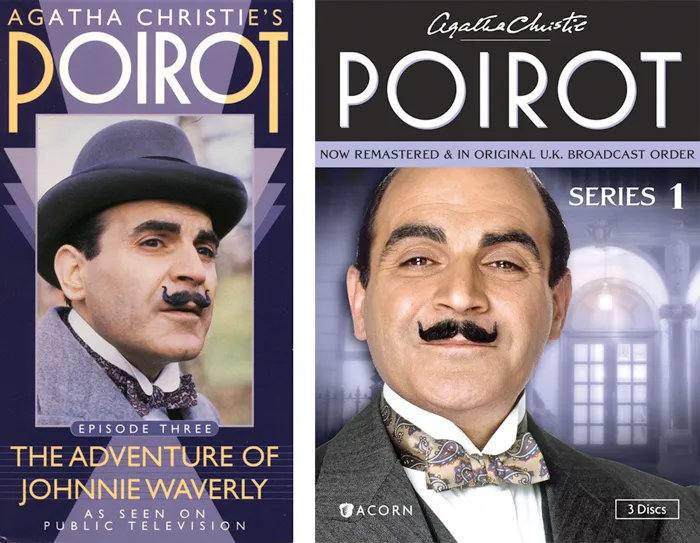
Back in 1991, I designed a series of packages for the American release of London Weekend Television’s Poirot series on VHS. (My design is above on the left.) As part of the design, I drew the name “POIROT” in a geometric Art Deco style, which I thought was fitting for the series.
The other day, I happened to see the latest incarnation of the series packaging (above on the right) and noticed that the designer had set the title in one of my fonts, Mostra, which I never noticed before is pretty similar to my 1991 lettering design.
I wonder if they knew?
In yesterday’s installment, I got into the unseemly details of my close encounters with the cast of Mystery Science Theater 3000. This was nothing.
Best Brains, Inc. (BBI), the production company that made Mystery Science Theater 3000 (MST3K), was located in an industrial park in Eden Prairie, Minnesota, a fact that Pat and I confirmed (surreptitiously) one Sunday afternoon in 1991. (I will neither confirm or deny that we peered into the windows.)
As a graphic designer, I was appalled by the design of the official MST3K fan newsletter, Satellite News (Formerly The Binding Polymer). It was obviously not done by a professional designer. I decided to offer my services—for free, even—to take on design and production of the newsletter. Once they saw what I could do, it would be a slam-dunk. To demonstrate, with the help of a few tapes of the show, an SX-70 camera, an HP ScanJet, Photoshop and Illustrator, and a PostScript laser printer, I did a set of mock “redesigns” of the newsletter. I sent them, along with a cover letter, to Best Brains at the end of October, 1991.
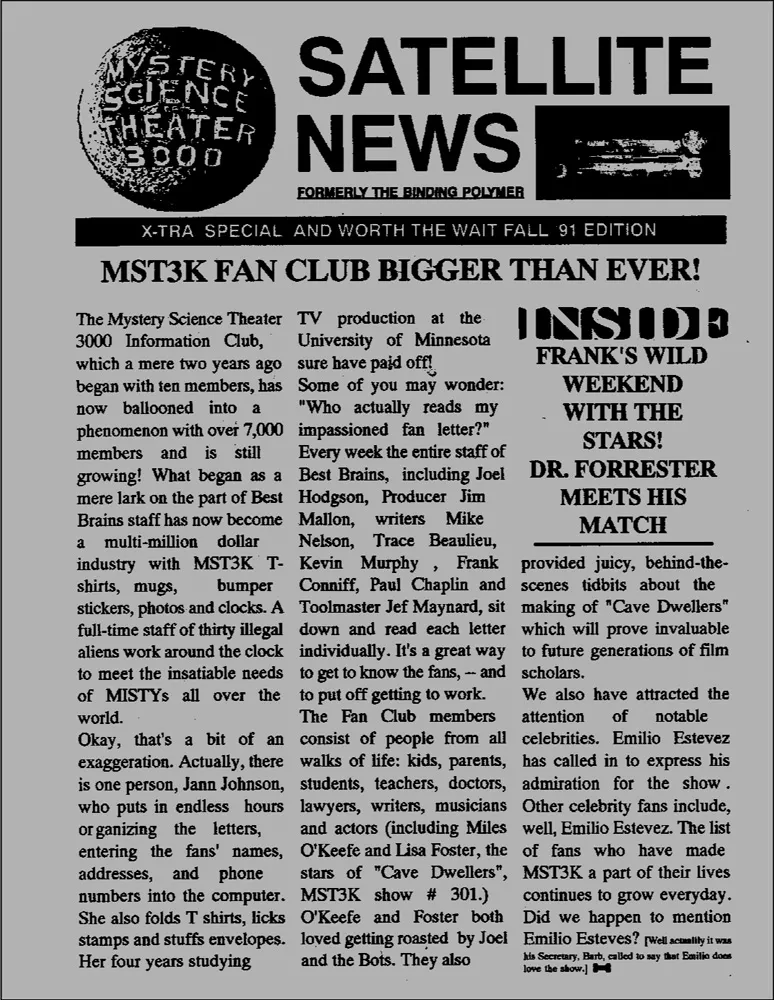
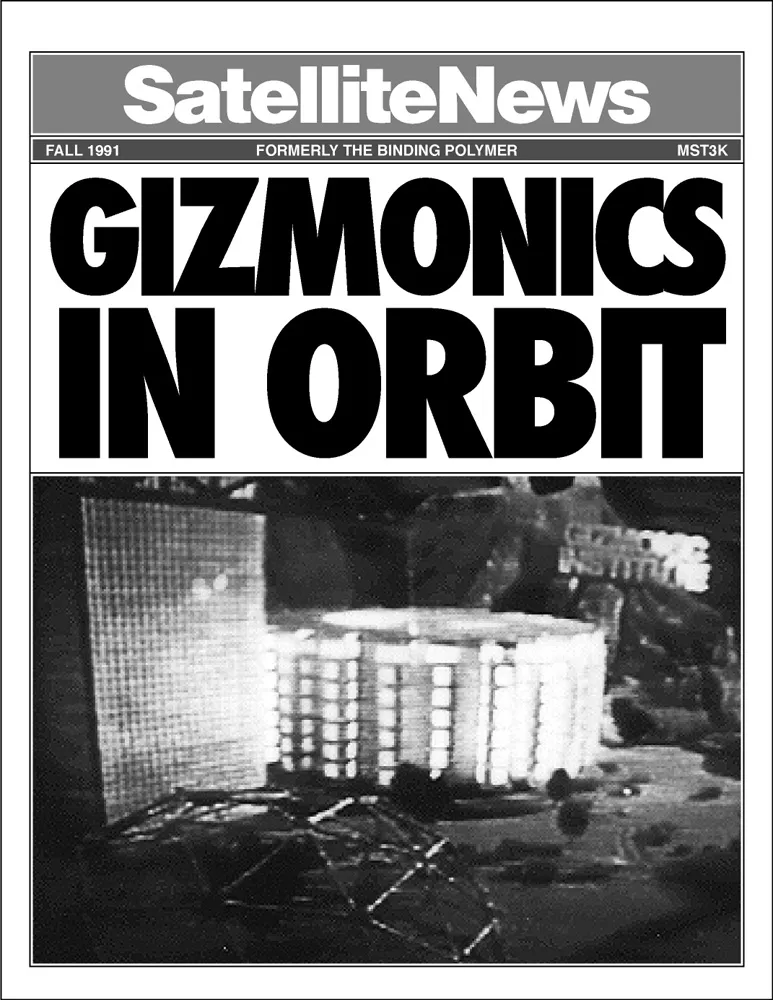
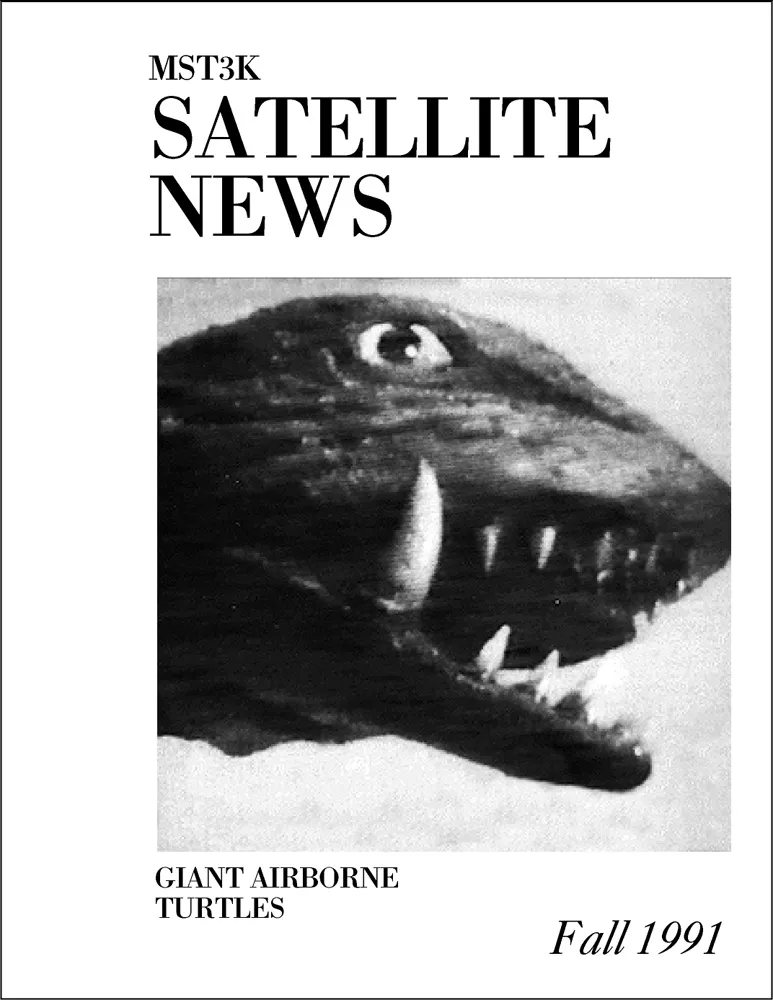
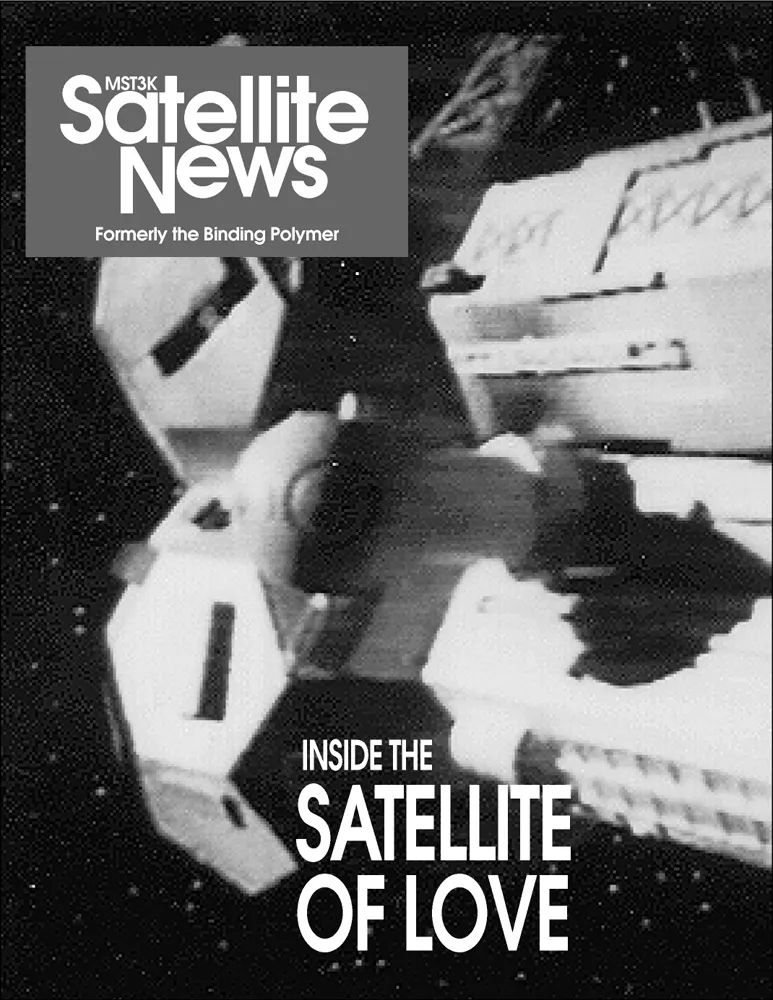
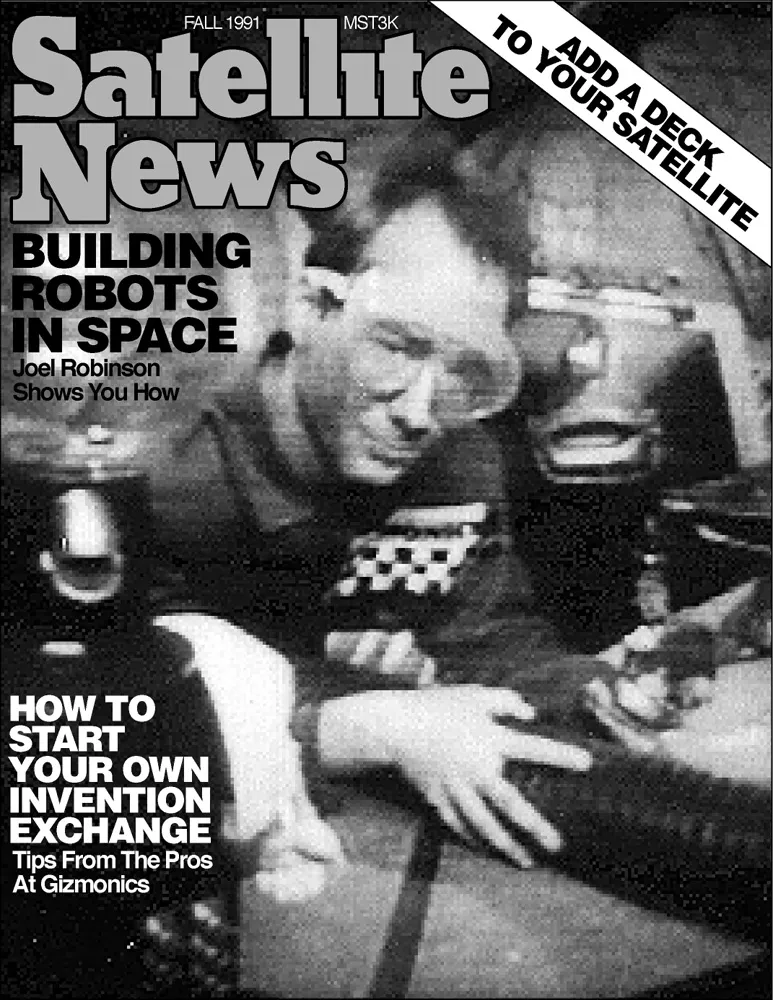
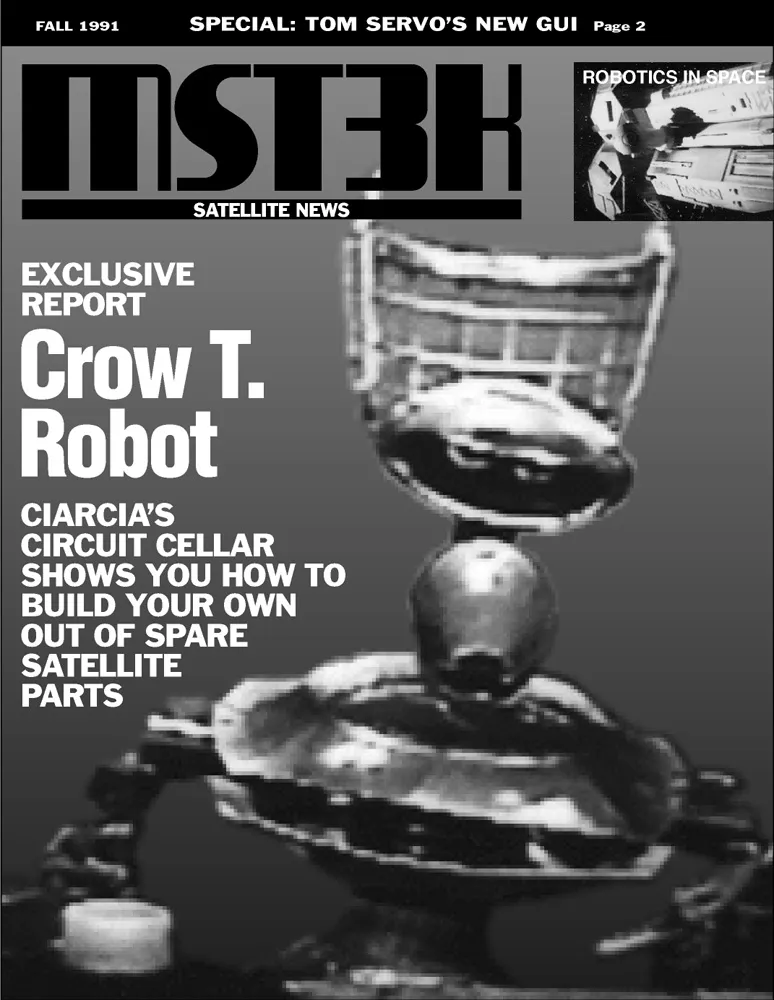
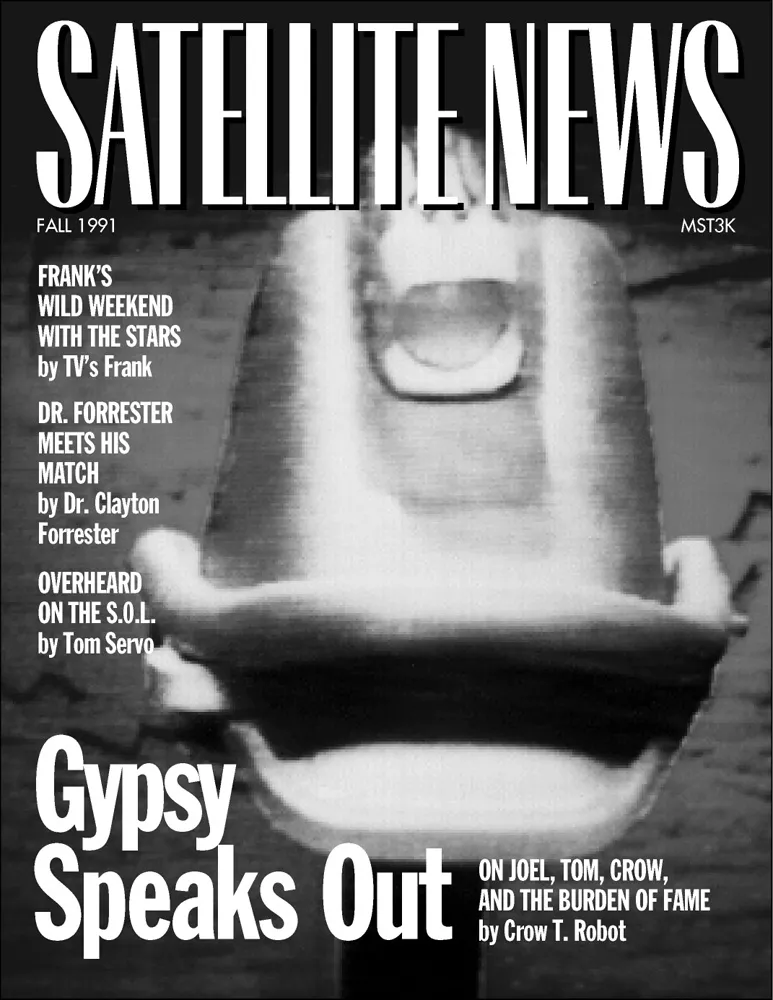
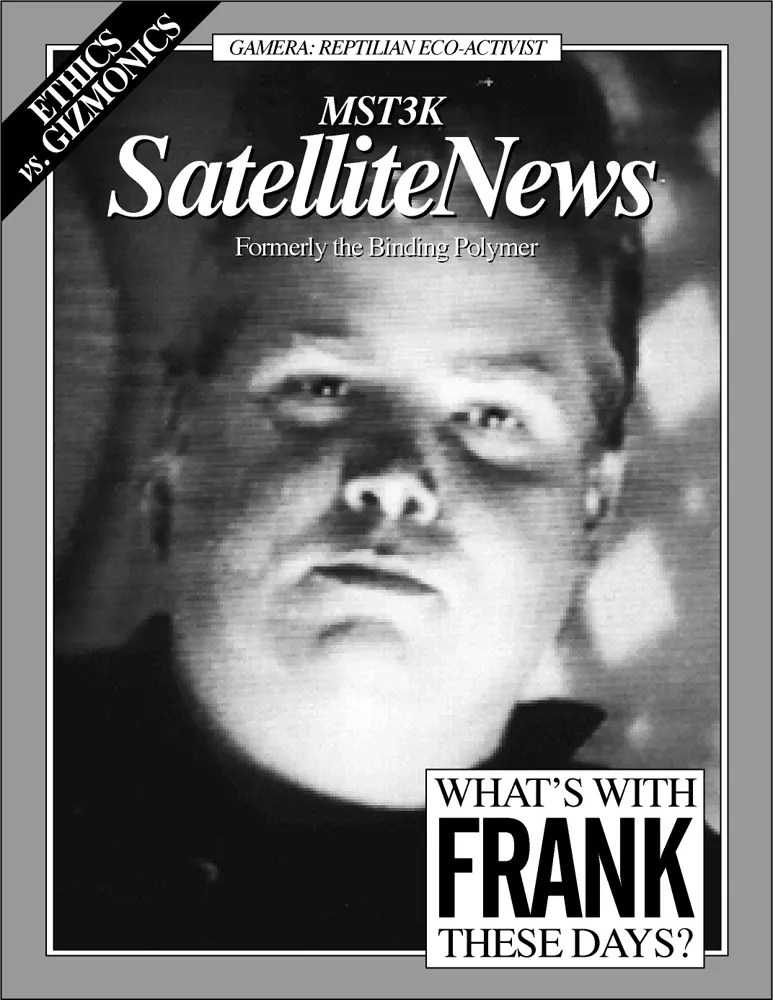
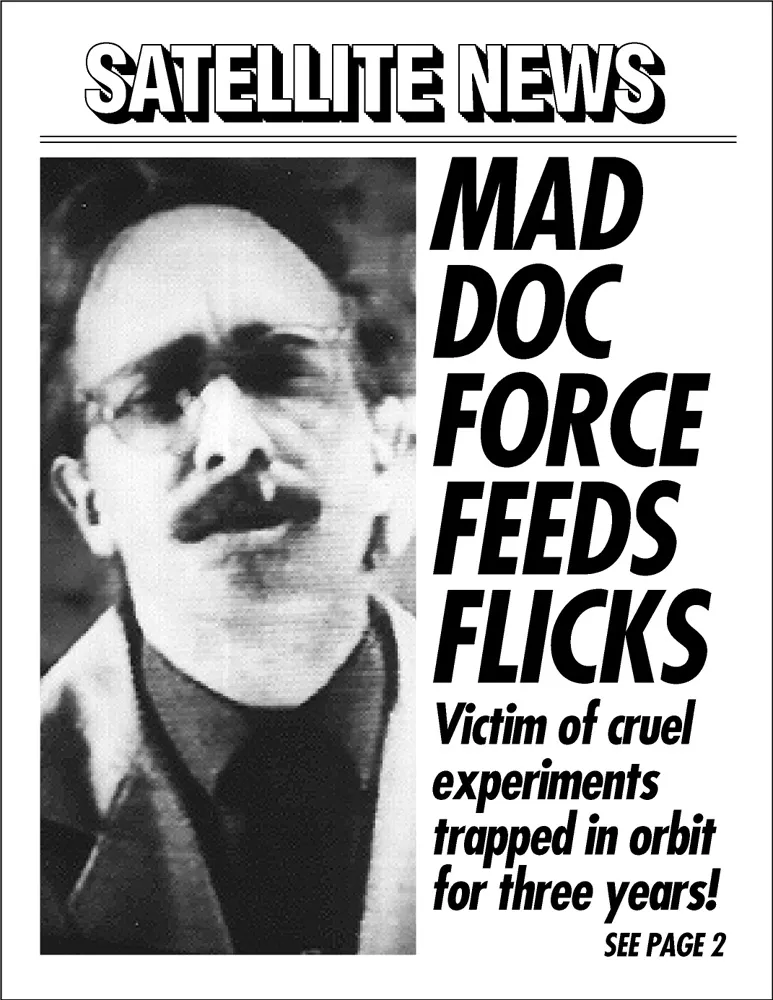
My mock “redesigns” of MST’s fan newsletter, Satellite News (Formerly The Binding Polymer), left to right, top to bottom: The original, as Business Week, as Scientific American, as Popular Science, as Popular Mechanics, as Byte, as Vanity Fair, as Utne Reader, and as The New York Post.
A day or so later, the phone rang. It was Jim Mallon, producer of MST3K! He wasn’t interested in me doing the newsletter, especially for free—that would taking advantage of me. But he loved the “redesigns” and they might have some work for me. He invited me down to the Best Brains offices to talk. I was very excited. Pat was very jealous.
The next day, I showed up at BBI, along with some samples of my work. There must have been some sort of mix up because I had to wait almost an hour. People kept coming up to me to ask if I had an appointment. While I was waiting, I could hear someone editing promo spots for the first of their yearly “Turkey Day” marathons.
At last, Jim Mallon appeared and started off by giving me a tour of the facilities. Along the way, I got to meet most of the people who worked on the show—Frank Conniff, Mike Nelson (who was head writer at the time), Trace Beaulieu, Kevin Murphy, tool master Jeff Maynard (the guy who made the props), Mary Jo Pehl, and Paul Chaplin. Joel Hodgson was out, and I had the impression that he wasn’t often in.
Among the things I saw on the tour:
- The writing room, which had big comfy couches and chairs, a small table with a Mac SE for transcribing ad libs, and a big-screen TV (not very big by modern standards, though).
- Writers’ offices—I remember Trace had the puppets from the KTMA incarnation of the show in his.
- The workshop, where all the props and stuff were made. Among the things I saw in the workshop was the big “Mystery Science Theater 3000” planet seen in the opening credits, which is about three feet tall, and was originally a prop from the Guthrie Theater, repurposed with a bit of hot glue and styrofoam. Also, multiple “trick” Tom Servo and Crow T. Robot puppets made for special effects, like when they needed Tom Servo’s head to blow up or something.
- The main production studio, a large warehouse-like room with the Satellite of Love “command deck” set on one end, and the “Deep 13” set off to one side. The “theater” area was opposite the S.O.L. set and consisted of the theater seat silhouettes (big cut-outs made of plywood) set in front of a large “green screen”. The performers would actually be watching the movie on a small TV monitor out of sight from the home audience. The S.O.L. set was actually raised up about three feet to make room for the performers who worked with puppets.
After the tour, I met with Jim, Trace, and Kevin, showing them some of my work. It seemed to go okay. They told me they were working on some tapes to sell to fans, the first of which was a collection of musical skits from the show called, “Play MST for Me.” I was suddenly in some sort of brainstorming session, and they kept looking at me, maybe hoping for me to be as funny as them. I felt a little ambushed. They were the funny guys. I was a designer. Given the situation, I saw myself (potentially) as what Michael Gross was to the National Lampoon. He never claimed to be a “funny” guy, but he knew how to use design to serve “funny”. In any case, I agreed to come up with some concepts, and I left feeling like I was starting a new page in my career.
When I got home, Kevin Murphy faxed me the copy for the package and I earnestly went to work, arriving at my first concept: Fairly straightforward type with a very long “funny” disclaimer, which I wrote. I faxed it over and waited. This didn’t go over very well—they weren’t expecting me to write copy. I considered what I wrote to be “dummy” text—that they would rewrite it. That didn’t matter, they didn’t like it.
I did a second concept: A parody of a cheesy, sentimental, as-seen-on-TV kind of shlocky record album cover—complete with swash headline type for the title. They didn’t like this one either. It was a design joke and I guess they didn’t get it.
I did a third concept: A record on a turntable, seen from above, with the letters of the title flying off the disc as it spins, a sort of slapstick approach. This one didn’t seem to grab them either, but I don’t remember why.
At this point, the project seemed to be stalled. I thought the ideas I sent them had potential, and could be developed further, but I wasn’t getting much feedback. It seemed almost as if they expected me to “wow” them with a fully-formed idea. I was expecting more back and forth. After a week went by, I called Jim Mallon to find out what was going on. He seemed surprised that I was calling—basically saying “don’t call us, we’ll call you”, and I never heard from them again.
One theory I have is that Trace Beaulieu had been doing all the “design” work, liked doing it, and wasn’t really interested in having anyone else do it. Or maybe they just didn’t like what I did. Or maybe I should have been more proactive, educating them about how to work with a designer. Who knows.
The important thing is, I got a personal tour of Best Brains. I think Pat is still jealous about that.