
The Day I Discovered Type Design
Fifty years ago this month, March 1976, at 20 years old, is when my interest in type design began.
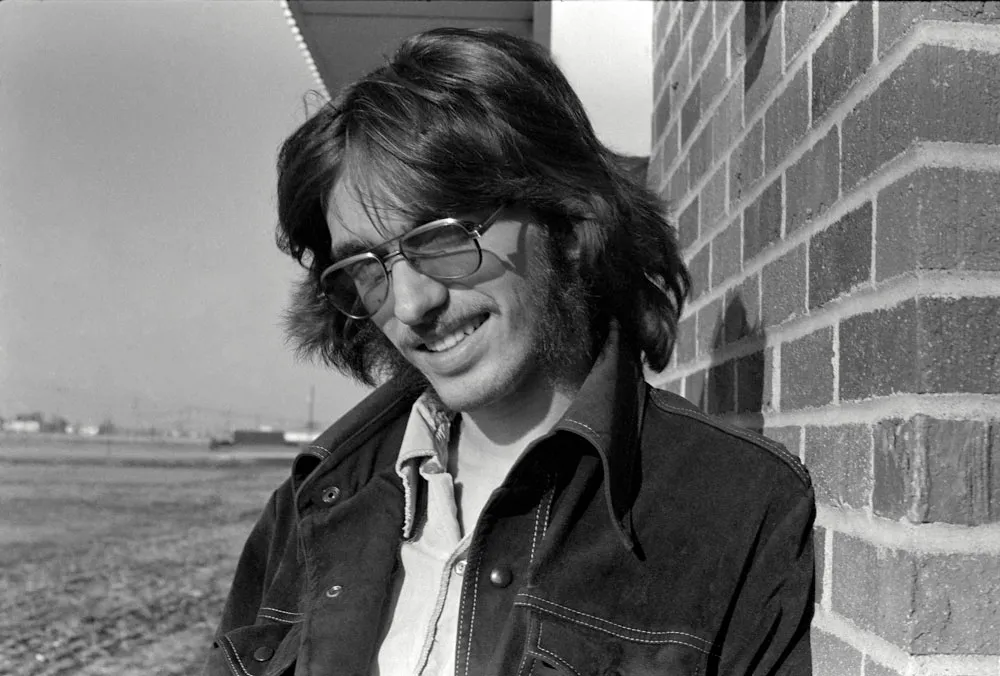
Me, in spring of 1976, about the time I discovered type design, standing outside the art department at NHCC. (Photo by Dan Bagaus)
I was in my second year of a two-year commercial art program at North Hennepin Community College, in a northern suburb of Minneapolis.
At first I was thinking of pursuing a career as an illustrator, but I was also interested in graphic design. In addition to these, I studied art history, drawing and painting, lettering, printmaking, as well as writing and other liberal arts classes.
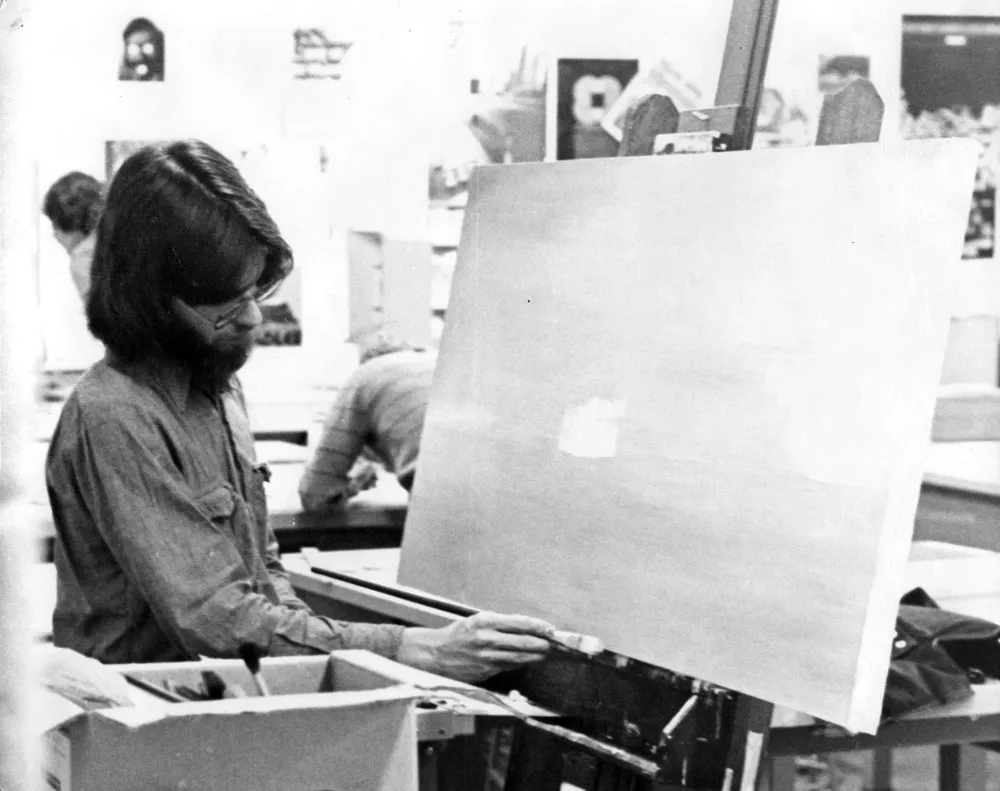
Me again, working on a project for a painting class in the graphics classroom at NHCC c. 1976. (Photo by Dan Bagaus)
What sparked my interest in type design was a project in the advanced lettering class. The instructor was Lance Kiland, with whom I kept in touch until his untimely passing in 2015. We mostly learned to do lettering with brushes and Speedball pens. At the time, lettering was considered a basic skill for a graphic designer. At the very least, you’d need it to do marker layouts, in order to sell a design to a client before it was set in actual type, which was very expensive. It was a decade before desktop publishing would allow anyone to set their own type on a personal computer and turn the business of typesetting upside down.
Lettering design I did for my high school yearbook in 1974.
I‘d been working with type and doing lettering since high school, as editor and designer of the school newspaper and yearbook. Frustrated with the limited methods we had to set headlines, I started purchasing rubdown type on my own. I fell in love with type from looking at Chartpak and Letraset catalogs, and started developing a taste for typography under the influence of my uncle Knut, who was a graphic designer in Chicago.
The final project in my college lettering class was to design a complete, original alphabet—a typeface.
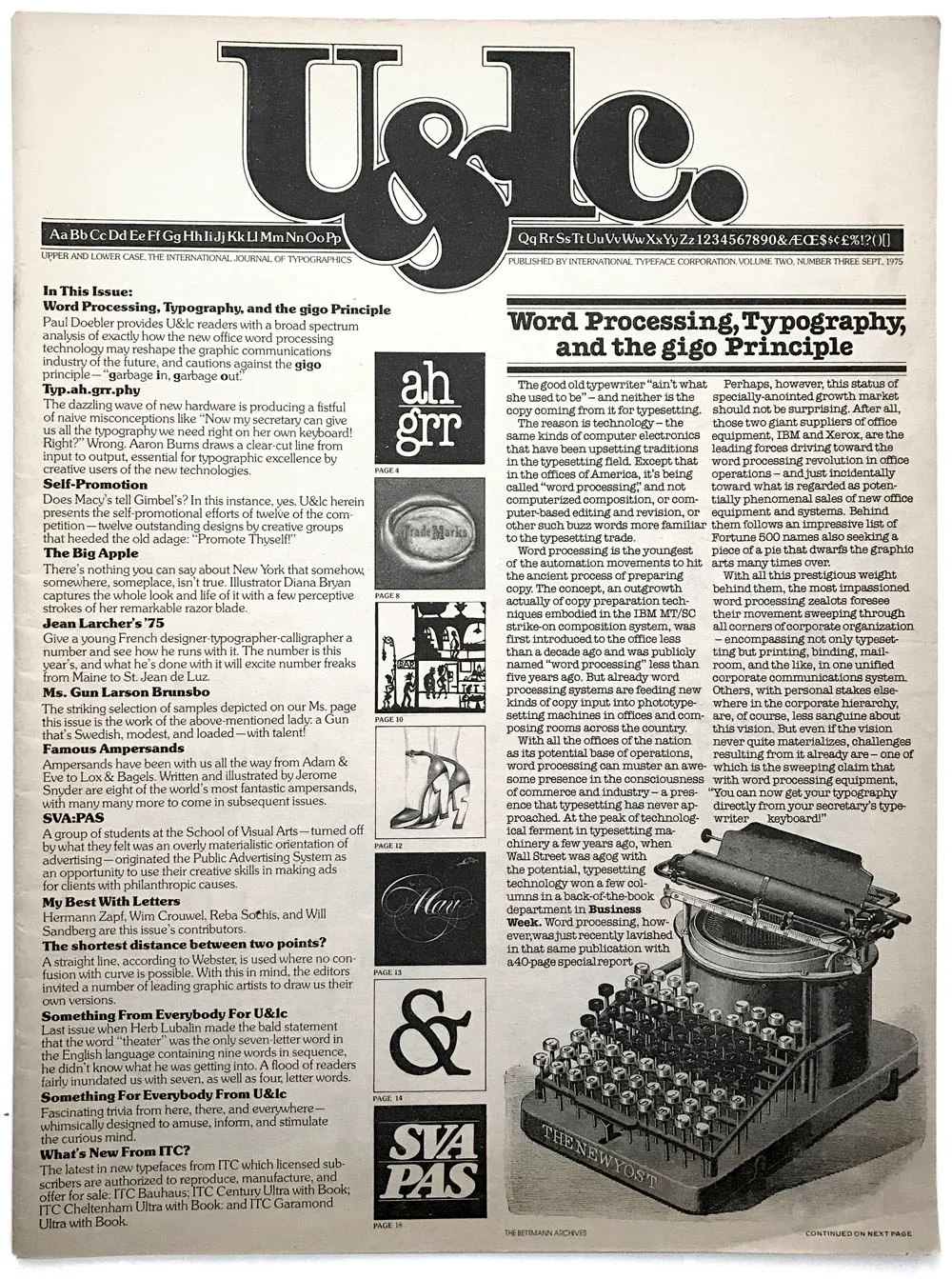
The issue of U&lc I discovered in the graphics classroom: Volume Two, Number Three, Sept. 1975.
Just by coincidence, I discovered a copy of U&lc magazine in the graphics classroom. U&lc was published by ITC, the International Typeface Corporation, a typeface publisher, and the designer and editor was the legendary Herb Lubalin. I’d never seen such beautiful typography and design. It was a motherlode for an aspiring typophile like me.
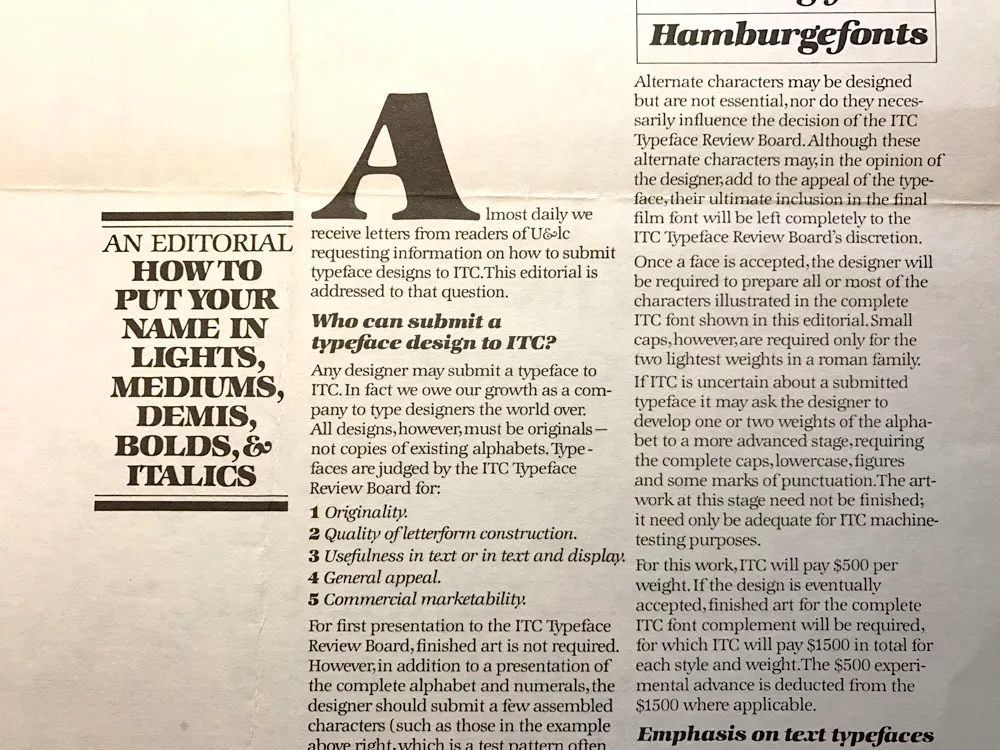
ITC’s call for typeface design submissions.
You could get ITC typefaces on virtually every typesetting machine and alphabet product, such as Letraset. In U&lc, I spotted a call for typeface submissions. If accepted, ITC would pay an advance plus royalties. Lance told me he’d heard of a designer in Minneapolis who’d made over $50,000 on a typeface design that got published (almost $290K in 2026 dollars).
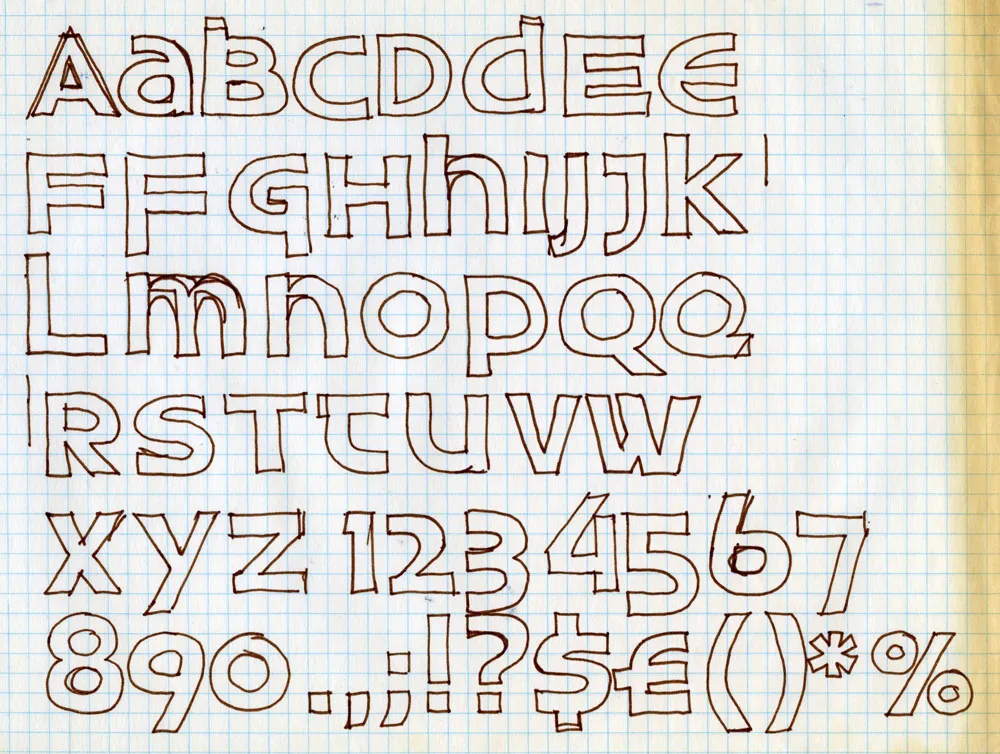
The concept sketch for my typeface design project, which I called Uncial Sans.
All of this was on my mind as I worked on the assignment. I came up with the idea of doing a very modern, geometric sans serif design based on the underlying forms of uncial calligraphy. I drafted the artwork on a large sheet of illustration board, with 2.5”-tall letters drawn by hand in ink with Rapid-o-Graph technical pens, T-square, circle templates, and other drawing tools.
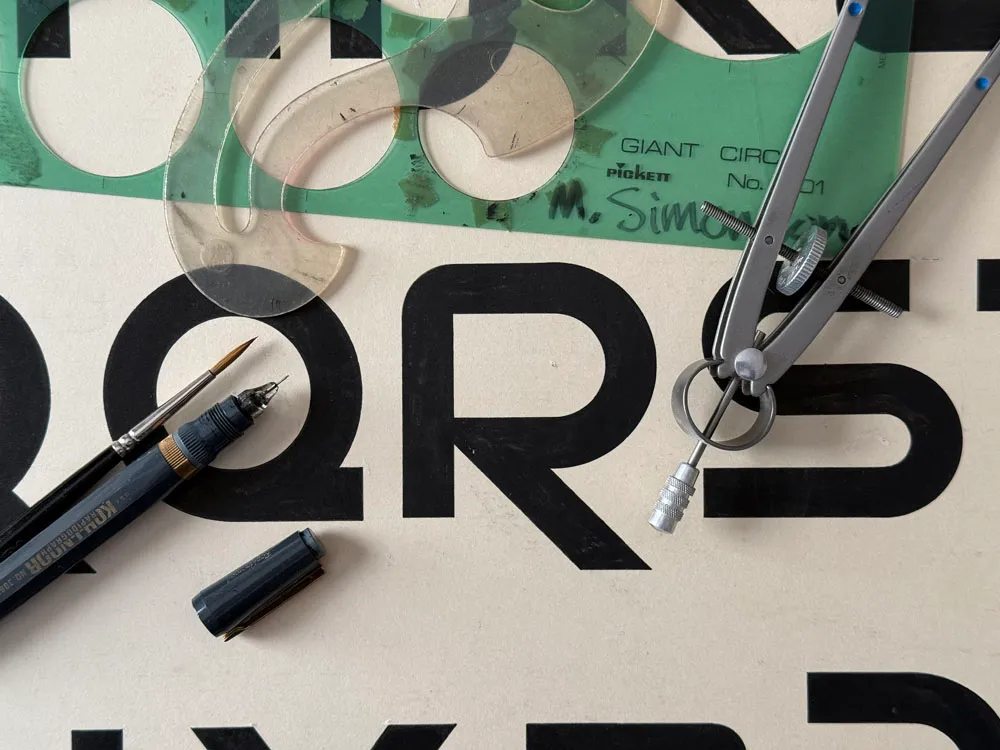
A close up of the finished artwork for Uncial Sans, showing some of the tools I used: circle templates, French curve, Rapid-O-Graph pen, brush, and compass.
Designing a typeface was very exciting. The idea of coming up with an original alphabet design fired my imagination. And learning that it was possible to design type professionally was a revelation. I decided right then that someday, somehow, I wanted to design typefaces. From that day on, even though I was doing other kinds of work in the coming decades (graphic design, art direction, some illustration), it was always in the back of my mind, and I found myself frequently sketching ideas for typefaces.
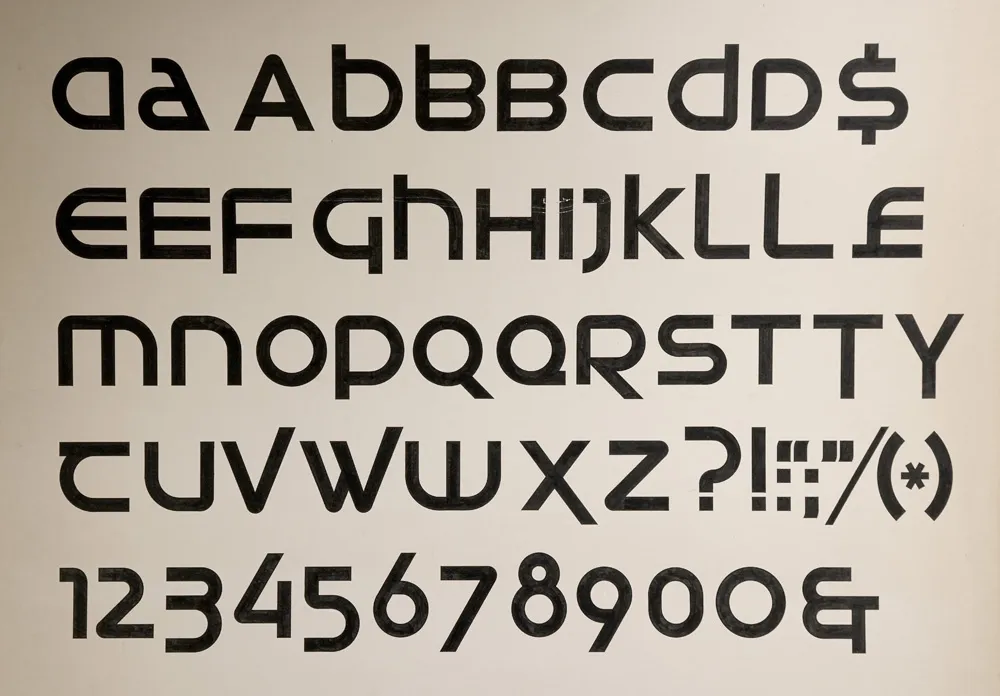
The finished artwork for Uncial Sans. Each letter is 4 inches tall, drawn by hand. Looking at it 50 years later, it’s got some design issues, but I got an encouraging A+ on the project.
It wasn’t until almost twenty years later, in the mid nineties, that I finally got a typeface published. But looking back, that lettering assignment in 1976 was where it all started.